

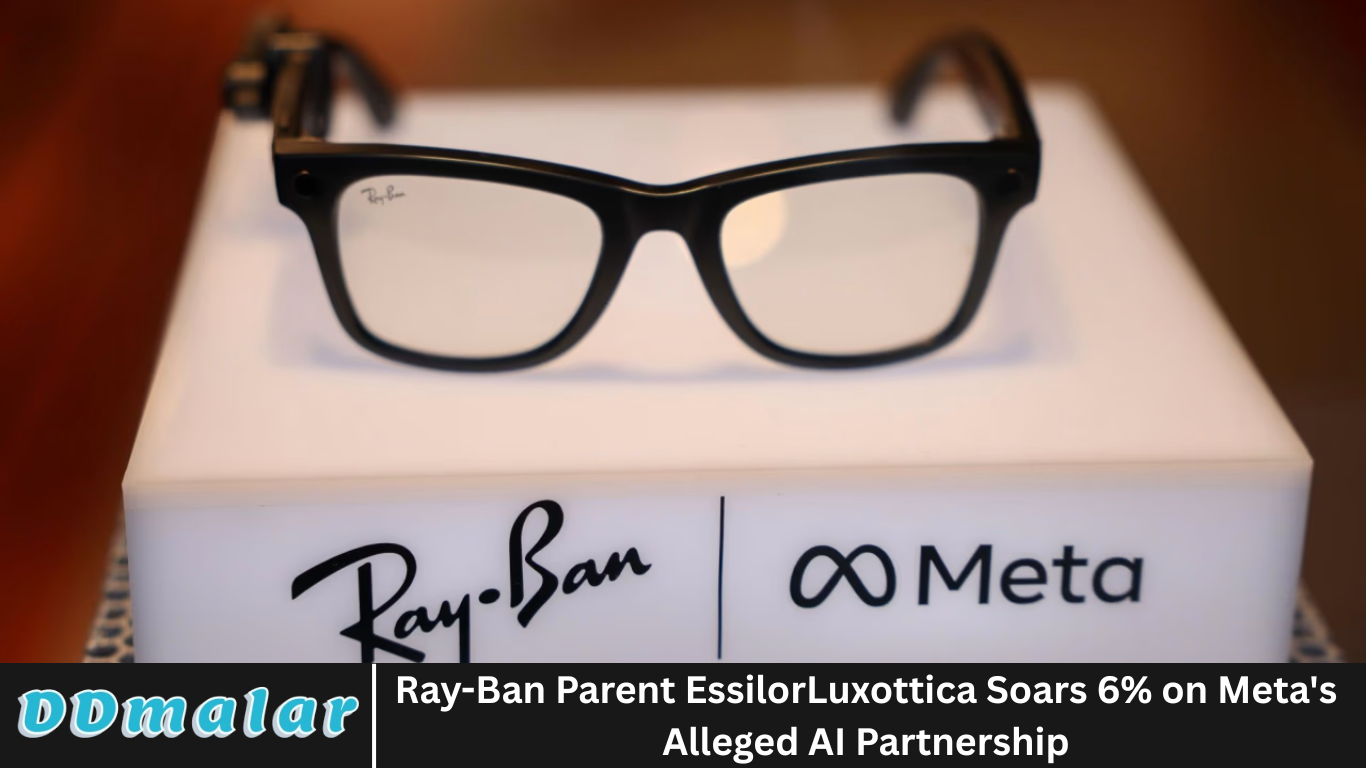
In a significant development that has sparked investor excitement, shares of EssilorLuxottica — the global eyewear giant and parent company of the iconic Ray-Ban brand — surged by 6% following reports of a potential partnership with tech powerhouse Meta Platforms Inc.
The alleged collaboration revolves around artificial intelligence (AI) integration in wearable technology, particularly smart glasses. As technology and fashion continue to converge, this news hints at a new era for consumer wearables, blending stylish design with cutting-edge digital innovation.
This article delves deep into what this potential alliance means for both companies, how it could reshape the future of augmented reality (AR) and smart eyewear, and the broader market implications. We’ll also explore the evolving landscape of AI-powered fashion technology and what it signals for investors, consumers, and the tech industry at large.
More Read: Starbucks China Reportedly Draws Bids Valuing Business Up to $10 Billion
EssilorLuxottica: A Global Eyewear Powerhouse
EssilorLuxottica was formed in 2018 through the merger of France’s Essilor, a leader in ophthalmic lenses, and Italy’s Luxottica, a giant in eyewear manufacturing and retail. Today, the company controls a remarkable portfolio that includes Ray-Ban, Oakley, Persol, and licenses for luxury brands like Prada, Chanel, and Versace.
With over 180,000 employees and operations spanning over 150 countries, EssilorLuxottica is a global force in vision care and eyewear fashion. Beyond stylish frames, the company is heavily invested in innovation — from lens technology to digital health solutions — which makes it an appealing partner for technology firms exploring wearable devices.
Meta’s Wearables Ambition
Meta, formerly Facebook, has been aggressively pivoting towards augmented reality (AR), virtual reality (VR), and AI technologies. Products like the Meta Quest headset and the development of the Metaverse indicate its long-term vision of immersive experiences powered by next-gen hardware.
In 2021, Meta and Ray-Ban debuted the Ray-Ban Stories, smart glasses that included cameras, speakers, and voice control. While the first version of these smart glasses offered limited functionality, it marked Meta’s first real push into the wearable tech space with a fashion-first approach.
Meta’s rumored AI-driven partnership with EssilorLuxottica suggests a strategic evolution — from experimental products to robust, mainstream smart eyewear capable of live translation, object recognition, hands-free communication, and more.
What Sparked the Surge?
According to sources familiar with the matter, Meta is considering a strategic investment in EssilorLuxottica or a deeper collaboration to co-develop AI-powered smart glasses and optical technologies. While neither company has confirmed the reports publicly, the mere speculation was enough to boost investor confidence.
Here’s why the market reacted so swiftly:
- Market Perception: A partnership with Meta adds tech prestige and innovation potential to EssilorLuxottica.
- Growth Opportunity: AI-driven wearables represent a fast-growing sector with multibillion-dollar potential.
- Brand Synergy: Ray-Ban’s classic style and Meta’s AI prowess make a compelling combination for consumer adoption.
The Future of Smart Glasses
The concept of smart glasses has long been a goal for tech firms, but success has been elusive. Google Glass failed due to privacy concerns and design flaws, while Snap’s Spectacles saw limited adoption. However, recent advances in AI and miniaturized hardware make modern smart glasses more feasible and appealing.
Features being tested or developed for the next generation of smart eyewear include:
- Real-time language translation
- Integrated voice assistant powered by AI
- Live notifications and AR overlays
- Fitness and health tracking
- Gesture-controlled interfaces
Camera and video streaming capabilities
An alliance between Meta and EssilorLuxottica could accelerate these features’ rollout and bring stylish, intelligent eyewear to the masses.
Why the Market Loves AI-Fashion Tech
Investors are increasingly excited about cross-industry collaborations that merge traditional consumer goods with AI. Why?
- Scalability – AI applications in consumer goods scale globally with minimal marginal cost.
- Data Collection – Smart glasses collect valuable user data for personalization and monetization.
- Stickiness – Products like AI wearables build customer habits and long-term platform engagement.
- New Revenue Streams – From app subscriptions to advertising, AI integration opens up monetization avenues.
By partnering with Meta, EssilorLuxottica enters a competitive arena dominated by Apple, Samsung, and Google, signaling serious intent in the smart device race.
Risks and Challenges Ahead
Despite market enthusiasm, several hurdles lie ahead:
Privacy Concerns
Smart glasses have cameras and microphones — raising questions about surveillance, data protection, and ethical use.
Adoption Barriers
Consumers may resist adopting eyewear with visible tech components, especially if it compromises style or comfort.
Battery and Performance Limitations
Maintaining high performance while ensuring long battery life in a compact form factor is technically demanding.
Regulatory Scrutiny
AI-enabled devices may fall under stricter consumer electronics regulation, especially in the EU and U.S.
How This Impacts the Broader Market
The reported Meta-EssilorLuxottica partnership represents a broader trend — the fusion of fashion and tech. Companies like Apple (with the Vision Pro), Amazon (Echo Frames), and Bose (audio sunglasses) are already experimenting in this space.
A successful rollout of truly functional and stylish smart eyewear could ignite a new consumer electronics category, much like smartphones did in the early 2000s.
The implications are significant:
- For Tech Firms: A race to create AI-powered wearables will intensify.
- For Fashion Brands: More labels may explore licensing deals with tech companies.
- For Investors: Smart wearable tech could emerge as a hot sector for long-term growth.
- For Consumers: The way we see, hear, and interact with the world may be fundamentally reshaped.
What Industry Experts Are Saying
- Daniel Ives (Wedbush Securities): “Meta’s partnership with EssilorLuxottica is a bold move to dominate the next frontier of wearables — blending style with functionality.”
- Cathy Hackl (Futurist & Tech Exec): “Smart glasses are about to become the next smartphone. Whoever cracks the code for user-friendly AI features will win big.”
- Neil Shah (Counterpoint Research): “The synergy of a heritage brand like Ray-Ban with cutting-edge AI could bring smart eyewear into mainstream adoption.”
Investor Outlook: Buy, Hold, or Sell?
With shares up 6%, analysts are revisiting their outlook on EssilorLuxottica:
- Bullish Case: If Meta commits to R&D, distribution, and joint branding, EssilorLuxottica could dominate an entirely new product category. Revenue from smart glasses could exceed $1 billion annually within 5 years.
- Bearish Case: If the partnership fizzles or fails to produce a market-ready product, the hype may fade and share prices may normalize.
- Neutral View: Wait for official confirmation and clearer strategic direction before making large investment moves.
For now, most financial analysts have moved EssilorLuxottica to a “moderate buy” status.
Frequently Asked Question
What triggered the 6% surge in EssilorLuxottica shares?
The rise was fueled by media reports suggesting Meta may be investing in or deepening its AI collaboration with EssilorLuxottica, specifically to develop smart glasses with enhanced artificial intelligence features.
Have Meta and EssilorLuxottica officially confirmed the partnership?
As of now, neither company has officially confirmed the partnership or investment. The stock market response is based on reports from sources close to the matter.
What are Ray-Ban Stories?
Ray-Ban Stories are smart glasses co-developed by Meta and EssilorLuxottica, launched in 2021. They include built-in cameras, microphones, speakers, and can take photos or play music, but lack advanced AI features — something future versions might correct.
How could AI improve smart glasses?
AI can enhance smart glasses by enabling features like real-time language translation, facial recognition, object identification, and personalized notifications — all hands-free and in real time.
What challenges could the partnership face?
Key challenges include privacy concerns, battery limitations, style-versus-functionality conflicts, and regulatory hurdles, especially with AI-powered surveillance.
What does this mean for the future of wearable tech?
If successful, this partnership could propel smart eyewear into the mainstream, opening a lucrative market for stylish, AI-integrated wearables that replace or complement smartphones.
Should investors buy EssilorLuxottica stock now?
While many analysts are optimistic, they also advise caution. It’s wise to wait for official confirmation and more detailed information about the partnership’s scope and timeline.
Conclusion
The rumored partnership between Meta and EssilorLuxottica could mark a pivotal moment in the evolution of wearable technology. As shares of the Ray-Ban parent company surge on the news, the excitement highlights investor belief in the power of AI to transform traditional industries. Whether this collaboration leads to the next big consumer tech revolution or ends up as another overhyped experiment remains to be seen.